

- Help Disputing a Medical Billing Error: What to Do When a Charge Looks Wrong - November 27, 2026
- Is a Donation to a Private School Tax Deductible? A Plain-English Q&A - November 20, 2026
- Best Medical Credit Cards: 12 Credit Cards for Medical Expenses - October 17, 2019
FTC Disclosure: We do make money from this blog and may receive compensation for this work in the form of commissions, fees, and complimentary product access.
You open a medical bill and find a charge you don’t recognize. Maybe there’s a procedure listed twice, a payment missing, or a balance that doesn’t match what your insurance company said you owe. You call the billing department, explain the problem, and hear that everything looks correct on their end. Now what?
Having spent years as a physician and working in healthcare operations, I know how complicated the billing process can get, even when you understand the healthcare side of things. I wouldn’t start by arguing over the total. First, figure out exactly which charge or adjustment is wrong and who has the authority to correct it, which may be the hospital, the physician’s billing office, or your insurer.
Start With the Bill, Not the Payment Deadline
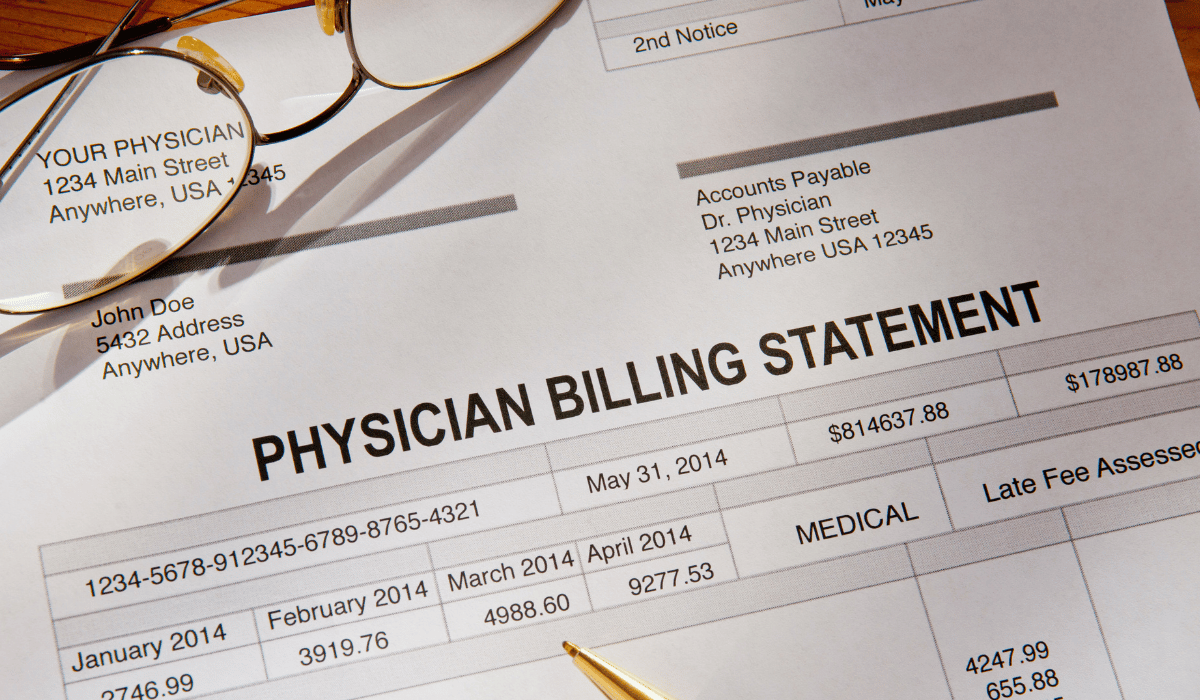
Most medical statements only show what you owe, not how they got that number. Before you pay anything, take these three steps:
- Ask for an itemized bill. Call the provider’s billing department and request onel. It should list each service and what you were charged for it, not just the total. If you’ve already paid part of the bill, keep that receipt handy too.
- Compare it with your EOB. If insurance covered any of the visit, find the Explanation of Benefits (EOB) for that date of service. An EOB isn’t a bill. It shows what the provider charged, what your plan allowed, what insurance paid, and what’s left for you to pay. Compare that amount with the provider’s bill, and take off anything you’ve already paid. If the two numbers don’t match, you have a clear place to start.
- Check the date and provider on each charge. One hospital visit can lead to separate bills from the hospital, the doctor, the lab, or the radiologist. So two charges that look alike aren’t always duplicates, and a bill that shows up weeks later isn’t always a mistake.
Identify the Kind of Error You’re Disputing

The first call goes better when you identify the questionable charge instead of challenging the whole bill. Some common situations include:
- Duplicate billing: The same service appears twice, and the provider can’t explain why both entries belong there.
- An unfamiliar service: A charge doesn’t match your appointment, test, or treatment.
- Incorrect patient information: A service has the wrong patient, date, or account information attached.
- Missing insurance adjustments: The provider’s statement doesn’t reflect a payment or contractual adjustment shown on the EOB.
- Incorrect insurance handling: A claim was submitted with information that needs correction, or your plan denied a service you believe should be covered.
Be careful with billing codes. A code you don’t recognize isn’t proof of an error. Ask what it represents and whether it matches the documented service. If necessary, request the relevant medical record to compare the care recorded with the charge.
An unexpected price also isn’t the same thing as a billing mistake. You might be facing a legitimate deductible, an out-of-network charge that raises separate consumer-protection questions, or an accurately billed service whose cost you simply can’t afford. Each calls for a different conversation.
Call the Right Department With a Specific Request

If the itemized statement includes an incorrect service or a missing payment, start with the provider’s billing office. Ask for a review of the specific line item and explain what evidence conflicts with it. Have the account number, service date, EOB, and any receipts available.
A straightforward request might sound like this:
“My statement lists this charge twice for the same date. Can you explain why there are two entries and review whether one needs to be removed?”
For a missing insurance adjustment, identify the EOB date and the amount you’re comparing.
Ask for the next step and a realistic follow-up date. Can the representative submit a correction, or does it require a coding review? Will someone contact you, or are you expected to call back?
I would also ask the billing office to note that the balance is disputed and whether collection activity can be placed on hold while the review is underway. Don’t assume that calling automatically stops reminders, interest, or collection activity. Get any agreed hold or revised deadline in writing.
If Insurance Is the Problem, Use the Appeal Process

First find out whether the provider submitted the claim incorrectly or the insurer made a decision you disagree with. Repeated calls asking the hospital for a discount won’t fix either problem.
If the provider made the mistake
If the wrong code, date, or insurance information went on the claim, ask the provider to correct and resubmit it.
If the provider agrees to correct the claim, follow up to confirm it was resubmitted to your insurer. Ask for the updated claim number or submission confirmation, if available, so you can track whether the correction has been processed.
If the insurer made the decision
If the claim was submitted correctly but the insurer denied coverage or applied the wrong benefit, use the insurer’s appeal process. Start with the denial notice and the insurer’s explanation of its decision.
- Check the deadline. For many private health plans, you generally have 180 days from receiving a denial notice to request an internal appeal. The applicable process can vary by coverage type, so check your plan’s deadlines instead of treating a phone conversation as a filed appeal.
- Send the right documents. Include the claim number, date of service, disputed decision, and documents supporting your request. For a denial involving medical necessity, the provider may need to supply clinical records or a supporting explanation. Find out which documents the insurer needs and who must submit them.
- Keep proof. Keep a copy of the appeal and proof that it was submitted. A representative saying they’ll “look into it” is not the same as initiating an appeal.
Check Whether Federal Billing Protections Apply

Some disputes involve more than a clerical mistake. Federal law protects patients from certain surprise bills, but only in two specific situations. If neither fits yours, you can skip to the next step.
A. You have private insurance and got a surprise out-of-network bill
The No Surprises Act helps protect most people with private insurance from surprise out-of-network bills. That includes most emergency care, air ambulance rides, and some care you get at an in-network hospital or clinic.
If you think a charge violates those protections, the Centers for Medicare & Medicaid Services (CMS) operates a No Surprises Help Desk that can explain the complaint process.
B. You were uninsured or didn’t use insurance, and your bill was much higher than your estimate
If you got a good faith estimate before scheduled care and the bill came in at least $400 higher, you may be able to use the patient-provider dispute resolution process. You usually have 120 days from the first bill to start, and it costs $25.
While the dispute is open, the provider can’t send the bill to collections, has to pause any collection efforts, and can’t charge late fees on the amount you’re disputing.
Keep in mind these protections only apply in these specific cases. A high deductible, for example, doesn’t count as a surprise bill.
Keep a Record That Someone Else Can Follow

Medical billing disputes often stretch across multiple calls. Without notes, you can waste an entire morning reconstructing the last conversation.
Keep a simple running log: the date, the department and representative you spoke with, the account or claim reference number, what you were told, and what happens next. Save copies of bills, EOBs, appeal letters, receipts, and messages.
If a representative agrees to correct a charge, ask when the revised statement will be available. Then check it. An oral assurance doesn’t necessarily mean the account has been updated, and you don’t want the next bill to restart the argument from the beginning.
What If the Billing Department Won’t Correct It?

A “no” from the first person you talk to doesn’t have to be the final answer. Here’s what to do next.
Escalate the call. Once you’ve explained the discrepancy and received a response, figure out whether the dispute was reviewed or simply closed after a routine account check. Ask for a supervisor or the department responsible for coding, insurance follow-up, or formal billing disputes, depending on the issue.
Put it in writing. If the call doesn’t resolve it, send a written dispute through the provider’s designated billing portal or dispute address. Include:
- Your account number
- Date of service
- The exact charge
- Why you believe it is incorrect
- The correction or explanation you are requesting
Attach copies of the relevant EOB, itemized statement, or receipt, but keep your originals. Ask for a written response and save proof of submission, whether that’s a portal confirmation or delivery record. That gives the next reviewer the facts without another lengthy phone call.
If your insurance appeal is denied. Read the decision letter for any remaining review rights. State consumer assistance programs may also help people navigate insurance problems. For broader financial or medical-access challenges, the Patient Advocate Foundation provides assistance to eligible patients, although its services and eligibility are not the same as hiring a private bill-negotiation advocate.
Keep disputed and undisputed amounts separate. Ask how the provider handles partial payments and whether paying one portion could affect the dispute. Don’t agree to a settlement or payment plan until you understand what the written terms say about the remaining charges.
Don’t ignore collection notices. If a collector contacts you, don’t ignore the notice because you’re still talking to the hospital. Collection disputes have their own rights and deadlines. Respond through the appropriate process, keep the notices, and make sure the provider and collector understand what is being challenged.
When to Use a Medical Billing Advocate
There’s a point where doing this yourself stops being a reasonable use of time. One clearly duplicated office-visit charge is something I’d try to correct directly. But it may be time to bring in help if:
- A hospital stay generates multiple statements
- Insurance and the provider disagree about adjustments
- Nobody can explain why the balance keeps changing
In those cases, you may need someone who can review the account as a whole rather than handle one phone call at a time.
That’s where a medical billing advocate can help. It’s the hands-off version of everything we’ve covered so far. An advocate reviews your bills and insurance paperwork, looks for errors like duplicate charges or claims that weren’t processed correctly, and contacts the billing department for you. Some also handle insurance appeals or negotiate a lower balance, so you’re not the one making every call.
Before hiring anyone though, you want to ask:
- Who does the work? Make sure the advocate will review the disputed charges and deal directly with the billing department, rather than just tell you which questions to ask.
- Do they handle your issue? Confirm whether the service covers your particular problem, especially if it involves an insurance appeal.
- How are they paid? Some charge by the hour, some charge a flat fee, and others only get paid if they lower your bill. Know the fee structure and terms before you submit your account.
Clearity Health is a good example of a service that does the full review and negotiation for you. Its physician-founded team checks bills line by line for errors, duplicate charges, and overcharges, then works directly with billing departments to dispute charges and negotiate the balance. There’s no upfront fee. If Clearity saves you money, its fee is 20% of the amount saved, capped at $1,000, and if there are no savings, there’s no fee. It doesn’t guarantee any particular reduction, but it’s a low-risk way to get a second set of eyes on a bill you can’t make sense of.
Confirm the Outcome Before You Consider the Dispute Closed

Once you finally get a “yes” from the billing department or your insurer, you’re close, but it’s not the finish line yet. Before you pay or move on, make sure the fix shows up on paper.
If a charge is corrected or reduced: Ask for an updated statement and compare it with the original bill and any insurance adjustments. If a provider agrees to accept a reduced payment as settlement, get written confirmation of what payment satisfies the account before sending money. Keep that documentation with the final receipt.
If insurance reprocesses the claim: Check both the new EOB and the provider’s revised balance. Follow up until the account reflects the decision rather than relying on the first reassuring phone call.
My Take: Start Small, Then Escalate

I’d start with one specific, documented question and give the right department a chance to fix it. If their explanation doesn’t hold up, move to the dispute or appeal process. And if the paperwork and phone calls become more than you want to deal with, that’s a good time to bring in a medical billing advocate.
Either way, the goal is to settle the real problem and know exactly what you owe before you pay.